

Enter Something Here

Truck Accidents

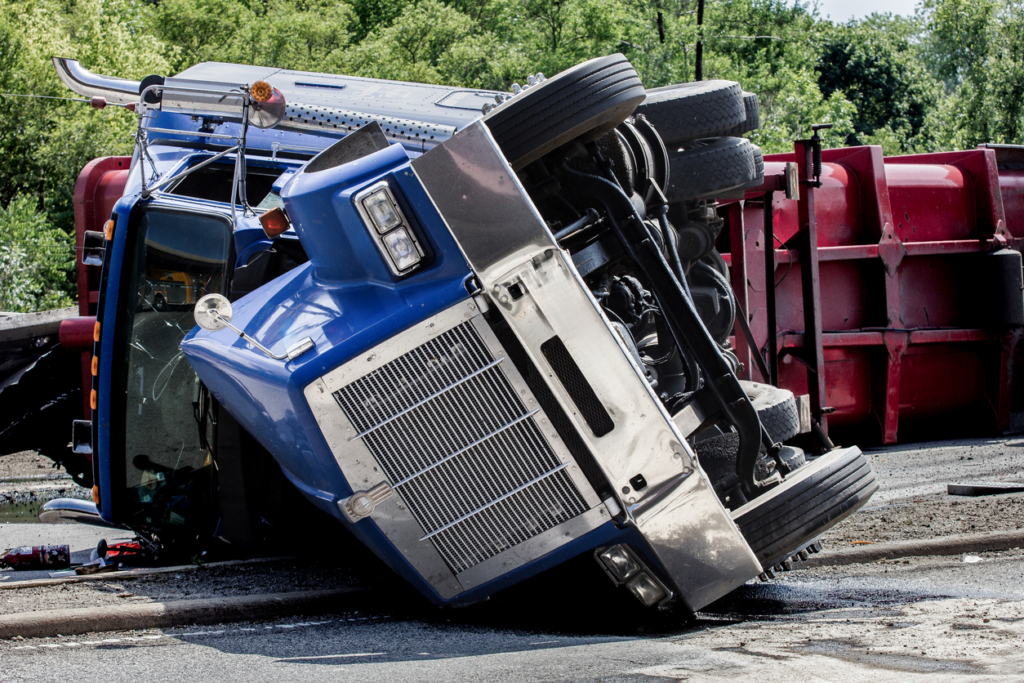
A fully loaded semi-truck can weigh over 20 times what a typical car weighs, and the driver sitting up in that cab cannot see anywhere near what a passenger vehicle driver can from behind the wheel. Mirrors help, but they do not eliminate the physical reality of massive blind spots surrounding a vehicle that long. Blind-spot truck accidents in Idaho Falls happen with startling frequency, and victims are often left with life-changing injuries.

At Parke Gordon Law, we are experienced advocates for those who have been injured in commercial truck accidents of all types, including accidents involving unmonitored blind spots. Our attorneys dig into what a truck driver could and could not see at the moment of a crash, since that detail often determines how a claim gets resolved and how much responsibility the trucking company ultimately bears.

super-lawyers 1
itla 1
uaj-300x111 1
waj-1
otla-logo
Our Process

How We Handle Your Case

1

We start by understanding your situation, reviewing the details of your accident, and advising you on your legal options.

2

Our team gathers medical records, accident reports, expert opinions, and all necessary documentation to support your claim.

3

We engage with insurance companies to pursue a fair settlement while keeping your best interests at the forefront.

4

If a fair offer is not made, we are fully prepared to take your case to court and advocate aggressively on your behalf.

Fighting for the Results You Deserve

Group 73
Handling Injury Claims For Over 25 years
Group 73
No Fees Unless We Win
Group 73
Client-First Legal Representation
Group 73
Thousands of Cases Successfully Handled

Strong Advocacy When It Matters Most

When a case moves into litigation, having a confident and experienced legal team comes essential. We approach every case with the mindset that preparation and precision make the difference. From presenting evidence to challenging opposing arguments, we advocate for your position with clarity, strategy.

Our team is committed to standing firmly on your behalf in every setting—whether in negotiations, hearings, or the courtroom. We understand the pressure clients face during this stage, and we work to ensure your voice is heard and your case is presented with strength and credibility.

left-sec-image

Where Are a Truck’s Blind Spots?

Every semi-truck has four zones where a driver’s visibility drops sharply, commonly referred to in the trucking industry as no-zones. These areas are significantly larger than the blind spots on a standard car or pickup truck, and federal trucking safety guidance requires drivers to account for them, though many drivers still rely too heavily on habit rather than actively checking these zones before maneuvering. The four areas include:

  • The stretch immediately ahead of the cab, where the hood and mirrors block anything closely trailing the front bumper
  • The space directly behind the trailer, a long stretch where no mirror on the truck offers any view at all
  • The passenger side of the trailer, the widest gap in a driver’s field of view and the zone most linked to serious crashes
  • The driver’s side of the trailer, narrower than the passenger side but still wide enough to swallow a full sized car

A blind-spot truck accident in Idaho Falls tends to happen in a handful of predictable moments: a driver signaling into an occupied lane, a truck merging without a clear read on nearby traffic, or a wide turn that sweeps through a stretch of road a smaller vehicle happened to occupy.

Who Is Considered at Fault in a Blind-Spot Truck Accident?

Although it is a truck driver’s duty to carefully monitor their no-zones and drive cautiously, fault in these cases is not always straightforward. A truck driver who fails to check mirrors, use turn signals with enough lead time, or account for known blind spots before changing lanes can bear significant responsibility. At the same time, insurance companies representing trucking companies frequently argue that the other driver lingered in a no-zone longer than necessary or made an unsafe pass, shifting blame onto the smaller vehicle rather than the commercial driver.

Because these disputes over who caused the accident come up so often in blind-spot cases specifically, Idaho’s fault rules end up playing a direct role in what a case is worth. Under Idaho Code § 6-801, a person can still recover damages even if they hold some fault, provided that their share is less than 50 percent. Exceeding that 50 percent mark eliminates any right to compensation under Idaho law. Trucking companies and their insurers know this rule well, which is why it is so important to quickly build a record of exactly where each vehicle was positioned, often through dashcam footage, event data recorders, or witness accounts.
Discuss Your Legal Options Following a Blind-Spot Accident in Idaho Falls

Many crashes come down to speed or timing. Blind-spot truck accidents in Idaho Falls usually come down to something different: whether the truck driver had any real chance of seeing the other vehicle at all. That distinction shapes how these claims get argued and resolved.

Parke Gordon Law looks at the physical layout of a crash the way an accident reconstructionist would, mapping out where each vehicle sat in relation to the truck’s no-zones in the moments before impact. If a commercial truck’s blind spot contributed to your accident, we invite you to discuss your legal options with our personal injury lawyers and get answers to your questions during a free initial consultation.