





Spinal Cord Injury Levels and What They Mean
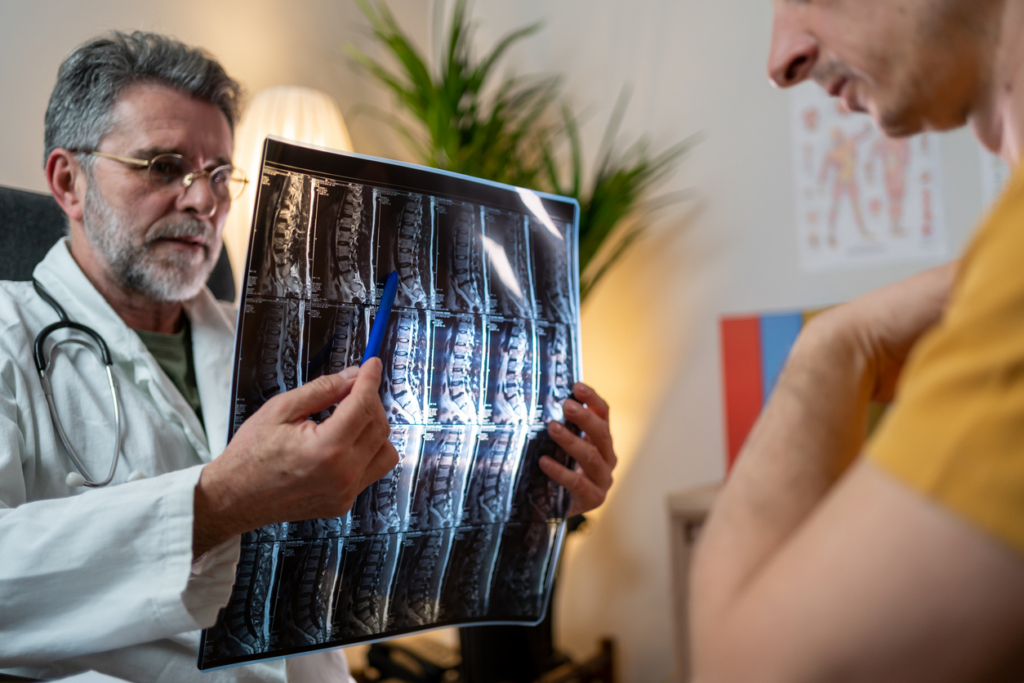
Doctors identify spinal cord injuries by the region of the spine involved and by whether the injury is complete or incomplete. A complete injury means no neurological signals pass below the site of damage. An incomplete injury means some function remains, which can range from mild weakness to significant impairment. The four regions of the spine, from top to bottom, are:
- Cervical, the neck region, where injuries often affect the arms, hands, torso, and legs
- Thoracic, the upper and mid back, where injuries typically affect the torso and legs
- Lumbar, the lower back, where injuries often affect the hips and legs
- Sacral, the lowest region, where injuries can affect the hips, legs, and bladder or bowel function
An injury higher on the spine generally involves a greater loss of function than one lower down, though the completeness of the injury matters just as much as its location. A person with an incomplete injury at the neck can sometimes retain more function than someone with a complete injury much lower on the spine, which is why every spinal cord injury case in Boise requires a careful review of medical imaging and physician notes rather than assumptions based on where the injury happened.
What Types Of Accidents In Boise Lead To Spinal Cord Injuries?
Spinal cord damage usually results from sudden force, whether that comes from a direct blow, a violent twisting motion, or compression of the vertebrae. In our experience, these injuries most often trace back to high speed car accidents, semi-truck collisions, motorcycle crashes, and serious falls, all situations where the body absorbs far more force than the spine was built to handle.
Because these accidents frequently involve reckless behavior, such as a driver who was intoxicated, distracted, or grossly exceeding the speed limit, Idaho law allows for an additional category of compensation in severe cases. Under Idaho Code § 6-1604, a court can award punitive damages on top of standard compensation when a claimant proves, through clear and convincing evidence, that the defendant acted with oppressive, fraudulent, malicious, or outrageous conduct. This is a higher bar than what applies to a standard negligence claim, but it exists for cases where someone’s careless or reckless decision caused catastrophic, permanent harm.